We use cookies and similar technologies to analyze website traffic and support our marketing efforts. You can accept, reject, or manage your preferences at any time. Read our Privacy Policy
As demand for cloud computing, data storage, and digital services continues to rise, Sturgeon County is emerging as a prime location for data centres. The area’s robust connectivity, combined with access to abundant energy resources and a growing skilled workforce, makes it an attractive destination for businesses looking to expand their digital infrastructure.
Supporting Data Centre Value Chain
Skilled and Talented Workforce
Access a large regional talent pool. The Edmonton Metro Region has 8 post-secondary institutions and almost 100,000 tech workers – with more graduating every year. Our region is the third-largest supplier of STEM graduates in the country. The University of Alberta is ranked 2nd in North America for AI and is #1 in Canada for AI research.
Market Demand and Growth
Canada is showing rising demand for data centre investment driven by cloud services, IOT and big data. According to a 2026 CBRE report, the Canadian data centre market is expected to reach $16.8 billion by 2030. Alberta is well positioned to support this demand.
Reliable Energy Supply
Alberta is the only deregulated energy market in Canada. Due to our deregulated market, companies have options as to how they generate power. They can connect to existing infrastructure or generate their own. Sturgeon County has willing energy partners and sustainable energy providers.
Digital Infrastructure
Dark and lit fibre solutions are feasible in Sturgeon County. For large businesses that need a high-capacity way to connect multiple locations together or need a dedicated high-speed connection to the internet, Sturgeon County has a dark fibre lease program which allows businesses to purchase a dedicated fibre line.
Cool Low-Risk Environment
Sturgeon County is located in a low-risk region for natural disasters and allows you to save on cooling costs due to our natural climate. Northern Alberta has an average annual high of 6.35°C (43.43°F) and a low of -1.2°C (29.8°F). Our cold season lasts about three months, with average January lows around -16 °C (3.2 °F).
Availability of suitable land
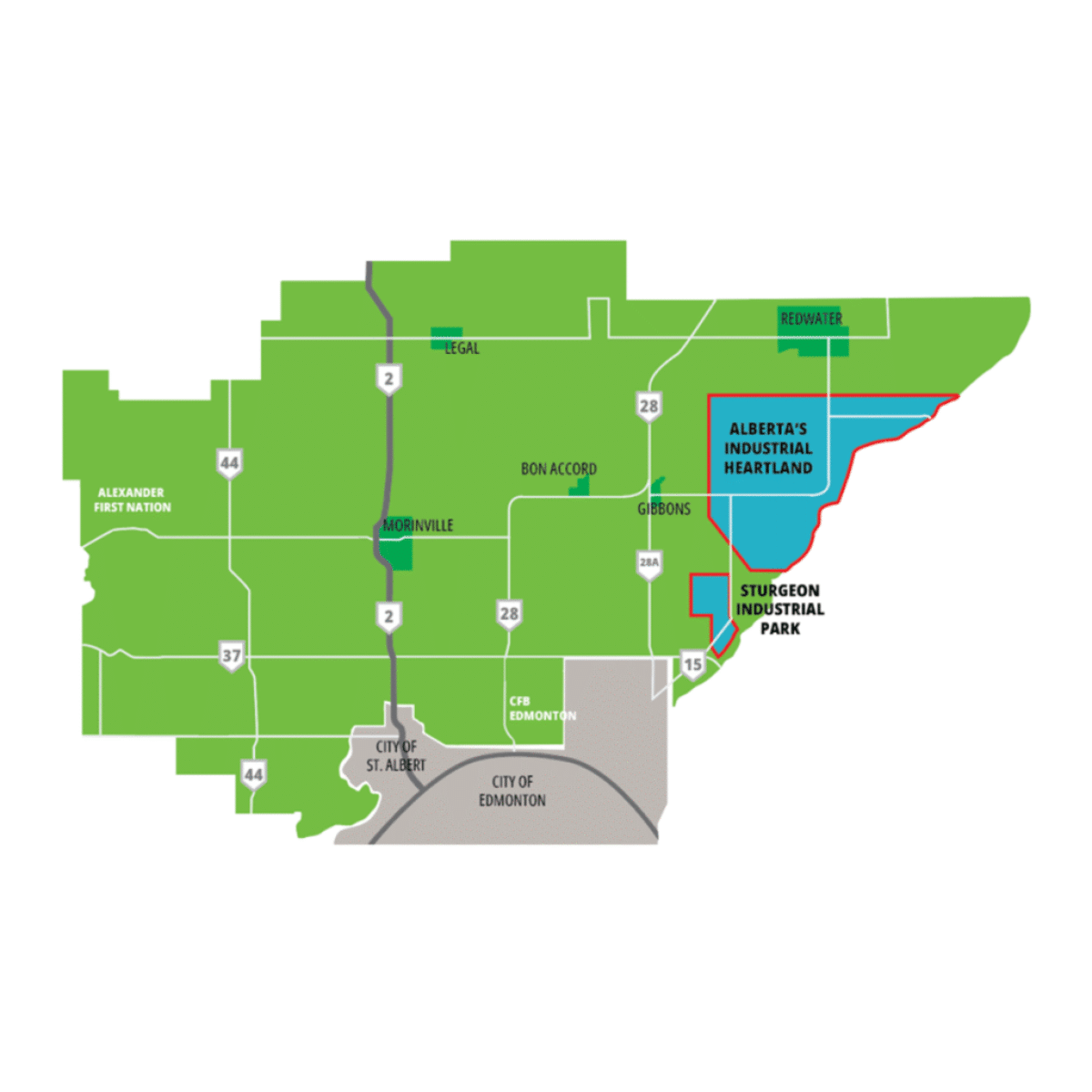
Access to land, supportive partners and proximity to power generation exists here. Over 100 square kilometres of pre-zoned land designated for data centre use in either Alberta’s Industrial Heartland or Sturgeon Industrial Park.
Competitive Tax Advantage
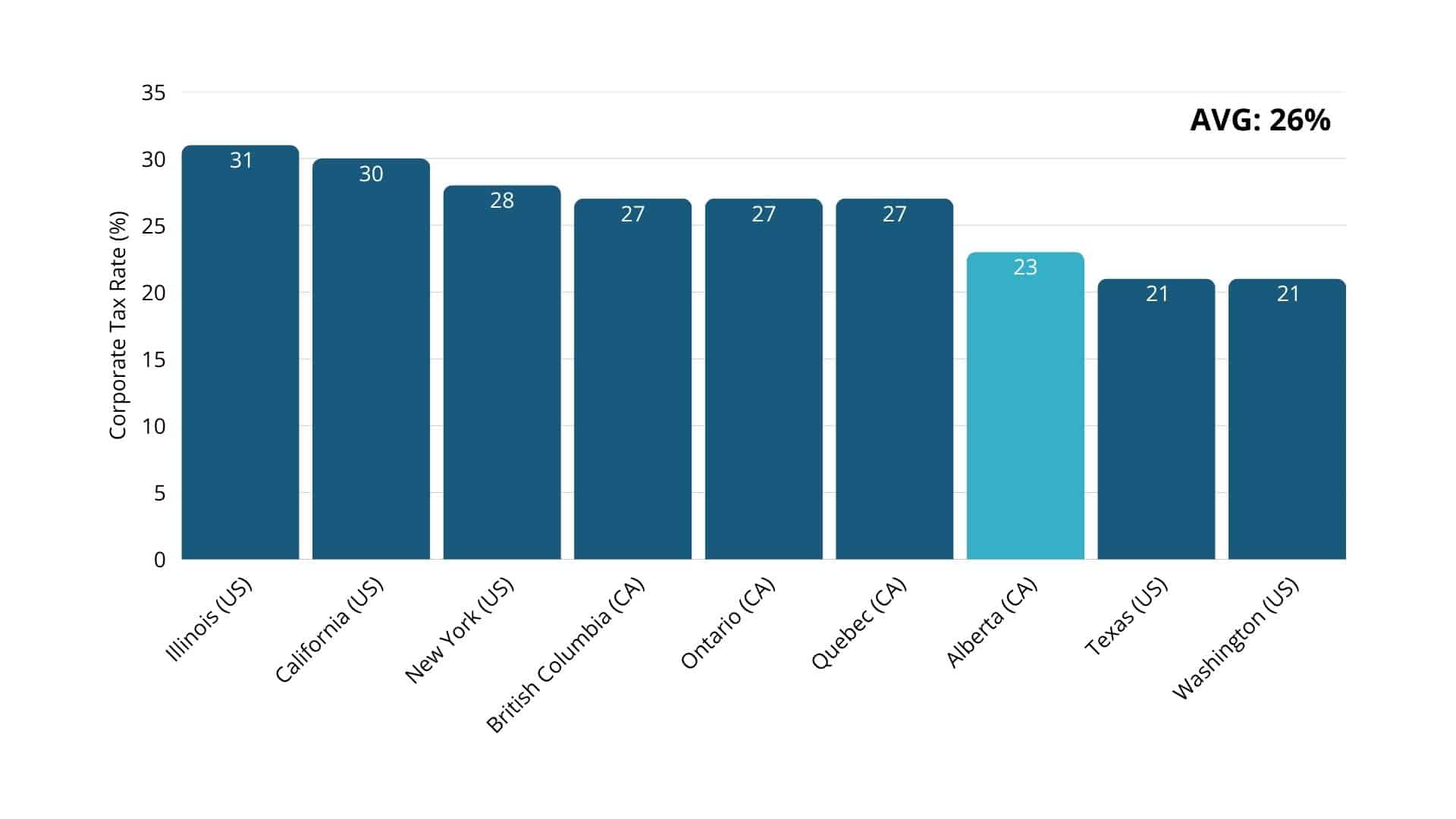
In Sturgeon County, access an attractive market with a considerable tax advantage. Alberta has the lowest tax rates in Canada and lower corporate taxes than 44 U.S. states. Locally, Sturgeon County does not assess or place any taxes on server equipment.
County's Approach to Development
The County’s approach can be summed up simply: right place, right rules. Data centre projects are expected to locate in pre-zoned industrial areas, specifically Alberta’s Industrial Heartland (AIH) and Sturgeon Industrial Park (SIP). These zones are already planned and serviced for heavier industrial uses, which helps:
Keep intensive development away from residential neighbourhoods.
Make use of existing transportation, energy and utility corridors.
Provide clearer expectations for developers and residents alike.
Before major permits are issued, proponents must clearly demonstrate how their project will manage water use and construction impacts. For example, data centres will utilize a planned process water system, separate from residential systems. This front-end planning is essential to ensuring projects fit within local infrastructure and environmental limits.
Projects should align with Government of Alberta policies and requirements for power generation and supply.
2. Minimize water use
Data centres to use the most advanced technologies to minimize water consumption (e.g. closed-loop, dry-cooling or more).
3. No municipal incentives
Sturgeon County will not provide financial incentives for data centre development.
4. Public annual reporting
It’s expected that operators publicly report annually on water use, noise levels and nitrogen oxide (NOx) emissions.
5. Developer-funded infrastructure
Developers must fund all project-related infrastructure improvements. Costs cannot be transferred to municipal ratepayers.
6. Minimal community impacts
Projects should use industry-leading technology relating to noise mitigation, water consumption and other measures to minimize impacts on surrounding communities.
7. Location
Data centre projects and power generation facilities should be located in I5 Heavy Industrial zoned areas.
Data Centre Ecosystem Players
Meta Breaks Ground on $13 Billion Data Centre in Sturgeon County
Meta selected Sturgeon County for its first Canadian data centre, a $13B investment that highlights the region’s strength in industrial land, infrastructure, and workforce. The project is creating 3000+ jobs and positioning the County as a growing hub for digital infrastructure.
Alberta is the only deregulated energy market in Canada. Due to this environment, companies locating in Alberta have options as to how they generate electricity. They can choose to:
Connect to Existing Infrastructure
Companies can buy electricity from a utility company at a set rate or sign a power purchase agreement (PPA) with a supplier at a negotiated rate and timeframe.
Generate Your Own Electricity
Companies can choose to generate their own electricity on-site, “behind the fence”. Sturgeon County has willing energy partners, or companies can go this route on their own.
Combination of Both
Companies can choose to connect to the grid and generate their own electricity.
We have local low-cost, low-carbon partners willing to invest in energy generation and able to assist you with tapping into local carbon capture, utilization and storage opportunities.
Deregulated North American Market
Regulatory Framework
In Alberta, every data centre construction adheres to federal, provincial, and municipal regulations. These guidelines span critical areas such as land use, environmental impact, building codes, power infrastructure, etc. This ensures a secure and compliant operational environment. Below is a sampling of regulatory bodies you may need to engage with.